Tuesday, July 9, 2013

Create the right context for innovation


Why is organizational climate so vitally important as we set the context for innovation?

This was one of the key messages that came through so strongly at the Creative Problem Solving Institute 2013 conference in Buffalo, USA.

The climate of the organisation is not the same as the culture and it is important that we measure it. Once we have some hard data on what the climate is, this enables us to explore ways that leaders can influence positive climate change and leverage it to boost performance and promote creative thinking.
If we do not introduce creative problem solving and innovation in to a context, there is little chance of success.

What is climate?
What is culture?

Think about what is in your experience a good place to work.
What made it a good workplace?
Examples are - flexibility, location, people, org purpose alignment, good work in the world, autonomy, play to win, different roles, very social, build on ideas, work life balance

How does this make you feel?
Examples - energized, engaged, creative, energetic, happy, useful, valued, part of a whole, world changing.

Then - think about the opposite of that - the bad workplace.   
Here are examples of what made it so: inconsistent expectations, no room for growth, politics, mismatch of skills, authoritarian leadership, instability, squashing ideas, oppressive, silos, environment, egos, bland

How does that make you feel?  Examples: frustrated, suffocated, insecure, drained, stressed, abused, unsatisfied, limited, unappreciated, unchallenged, stuck, idiotic, impatient, headachy, apathetic.

When you experience the great feelings, how do you behave:  committed, friendly, open, respectful, loyal, cheerful, willing to take risks, collaborative, part of a team, inclusive, initiative, sense of pride.

When you experience the bad feelings, how do you behave?  Examples - Procrastinate, not productive, backbiting, dishonest, secretive, minimal amount of work, sleepy, sporadic, disruptive, lack of caring, aggressive, sick leave, wanting to change, only there when i had to be, blame others, paranoid, protest everything, slouched.

So dare we say that there a correlation between workplace and performance? 
If you compare how people feel and how they perform, there is a strong correlation. It effects their level of engagement and retention.  The magnitude of this impact is sometimes underrated.

So to distinguish between culture and climate - culture is the values, beliefs, traditions and reflects the deeper foundations of the organisation.  What the organisation values is reinforced in the decisions that are made. 

Climate is the recurring patterns of feelings and attitudes and behavior that members of the organisation experience.

A changing climate eventually has an impact of culture. Climate is more visible, more on the surface and is easier to change. 
They are not entirely separate - over time as you impact the climate, you will impact the culture.  But it is easier to deal with the tree at the top and what is visible and where there is growth than by messing with the roots of the tree. When you walk in to an organisation, you can feel the difference.

Uncover your organisation’s climate data to determine what your current climate is by reviewing the following dimensions:

1. Challenge and involvement – determine what do they do on day to day basis and how this links and relates to what the purpose of the organisation is.  The more people see the connection, the more likely they are to be engaged.  

2. Measure Freedom - independence of behaviour exerted by the people such as respecting the individuals and no micro management.  

3. Determine the level of trust and openness - emotional safety in relationships.  Is there enough trust in the relationship to know my short comings.  The more productive the environment will be when people can spit out what they want to.

4. Look at the level of risk taking - how people deal with ambiguity and uncertainty.  Is there a level of tolerance for uncertainty?  We don’t always have to jump towards dotting the i's and crossing the t's.

5. Ask if there is a climate of debate - occurrence of encounters and disagreements between viewpoints.  Is there open and frank conversation and not a climate of taking things personally.

6. What level of idea support is there - ideas are respected and nurtured and not thrown out immediately.  Ideas not killed too soon so that they can move out the door and be adopted.  Novelty will otherwise not survive.

7. How is conflict managed – there is positive and negative conflict.  Distinguish between conflict and debate.  Conflict results in tension between people and leads to the deliberate sabotaging of ideas.  There are also many cases where organisations try to avoid the conflict and performance is zero unless the areas of friction are surfaced.

8. What is the level of playfulness and humour - ability to behave and interact in a spontaneous way.  Is humour is accepted no matter the level of the person?  Great climates weave this playfulness in to work.  People work to make play happen.  

9.How much play time is there - how much time do we have to develop and elaborate on new ideas? 

These observable and tangible behaviors can be measured.   We can easily see the stagnated organisations that cannot get stuff out the door to the marketplace.
Climate is the one variable that can be changed – and immediately innovation has a context and a soil in which to grow.  Climate has to be constantly watched – you have to recreate it every day.

Final notes:
 
1.    Climate is important and palpable and it is measurable.  When you target it specifically, you can move the needle on these dimensions.
2.    The climate for innovation is ignored at your own peril.
3.    This stuff is not soft - it is as hard as you get!

Unleash the possible - Learnings from CPSI 2013


We all have the potential for great results.  It starts somewhere – it just takes one step forward to make the impossible, possible!   This was the clear message from the top creative solving conference in the USA, CPSI 2013.

Here are some more insights that we gained:

Mary O'Hara Devereaux - http://global-foresight.net/ - was a fabulous speaker who reminded us that we used to think of the future by extrapolating from the past.  It no longer works like that.   

We need to develop a much stronger peripheral vision and look beyond narrow viewpoints. If we are trying to facilitate change we need to encourage our team to say yes to possibilities.   

We need courageous creativity so that we can put forward alternatives that are different from what we have today.

Mary also warned that you need to look for who is doing your future now!  There are always weak signals of things to come and someone out there is already doing your future, right now.  Remember that our competitors are no longer just local – they are global.


 Her 4 laws of the future are:

1. Don’t over-estimate the driving forces in the short term and underestimate their long term impacts.  We cannot only respond to the immediate

2. If something is unsustainable, in the long end it will end.  Trends are indicating disruptive shifts in work areas as follows:

Employee to entrepreneur
Career ladder to experience portfolio
Permanent to velcro relationships
Outsourcing to crowd sourcing
Physical to digital infrastructure
Organizations to social networks
Sharing knowledge to creating context for persuasive conversations

3. Her 3rd law of the future is pay attention to weak signals something in your peripheral vision that is noisy enough - it could be small but if you scan the horizon, think about these weak signals.  Some examples of recent weak signals include –

Most knowledge workers in the world are women

Net speak ‘OMG’ – is this a weak signal of the end of language as we know it?

3D printing – we will soon print out household goods for homes

China files more patents than Japan

Same sex marriage

The rise of the one person household

The second middle age from 60 - 80

4. Mary’s next law of the future - beware of conventional wisdom as it is nearly always wrong.

Take the transformation of medicine as one example.  The sacred cows have been turned out to pasture and we turn them in to hamburgers.

Don't let the short term cancel to the long term.


Mary’s other tips:

1. We are facing the end of work as we know it. We are looking at more robots and more smart machines.  

2. Watch for the growing irrelevance of knowledge.  There is more and more knowledge generated but we have to make sense of the knowledge.  Sense making is now king.  The real challenge is leveraging knowledge in the age of big data.

3. Look out for the rise of the individual and the ME economy.  We want the capability of hyper personalization to live our dream.

Tuesday, May 28, 2013

Silicon Valley – the heart of entrepreurism!


What an amazing tour arranged by the incredible CBA Women in Focus Community.  And so many learnings!! 

After visits to Ideo, Cisco, Linked In, Facebook, IBM Venture Capital, Eventbright and many more, here are just a few key ideas that really stood out:


  1. Be in perpetual BETA mode.  Don’t get so far down the road in projects that it is too hard to reverse and you are way too financially and emotionally invested.  Prototyping is at the core of everything. Develop a minimum viable product so you can act quicker and less expensively.  Develop multiple prototypes around the same challenge and then refine as you go along. Launch and learn.  Get live as soon as possible and grow as you learn more.
  2. Find ways to articulate your strategy.  It is no use having the strategy sit in a nice spreadsheet that no one understands clearly.  This is the only way in which you will hold everyone accountable.  When you communicate to people about the strategy, always follow the same template.  For example – start by referring back to the vision.  Then talk to the guiding principles that are set for the short and medium term.  Then set the execution - what initiatives will be in place?  Update everyone about how you are tracking against these guiding principles.  There is then total transparency and people know why you are making decisions. 
  3. Adaptability is a key capability. Innovate, lead and move as fast as you can!  You might have the best product, but this in no way guarantees that you will be successful.  There is so much competition and in order to prevail, size and scale might not be enough.  Go after those ‘sticky’ customers who stay with you for your ability to be ahead of the curve.    Be able to articulate the value that you bring to these customers so that things are easier for them.
  4. Culture is the key to business success.  With so much change happening in the market, cultures that remain glacial are not successful.  To start shifting your culture, think about:
  • Who is accountable for decisions?  Is this accountability real?  How do you create a common language for decisions?  Put together a common vocabulary. 
  • Know what your team thinks of the current culture by doing a survey.  Take the results on board and create the type of culture you are proud to be part of.

Practical programs to foster on-the-job development


What’s wrong with the following scenario?

Day 1: A new sales associate attends a half-day training session to learn about everything she needs to know on the job.
Day 2: She’s mobilised into action during the biggest sale of the year.
Day 3: She quits and/or goes insane.

You don’t have to be a rocket scientist to see that the outcomes are less than stellar. The sales associate is out of a job and the company is one sales associate short at a very crucial time. It’s exactly the kind of scenario — lack of adequate training — that can lead to lost business and diminished morale, not to mention the wasted time, effort and money spent by the company to source and hire the individual.  

When it comes to training staff members to be happy, productive and loyal to your organisation, sometimes presentations and manuals simply don’t cut it. However some other approaches, such as on-the-job training and development can be very effective. In fact, research by the Center for Creative Leadership tells us that up to 90 percent of what we need to know to do our jobs, we learn on the job.  If that’s the case, what are some of the ways your organisation can foster on-the-job training culture? Here are three suggestions.

Establish mentoring programs

Simply defined, mentoring is a professional relationship in which an experienced employee assists another in developing specific skills and knowledge that will enhance the less-experienced person’s professional and personal growth. Mentoring is a great way to foster loyalty because it demonstrates your company’s commitment to your employees’ satisfaction and longer-term career goals. It’s important to recognise that coaching and mentoring aren’t the same. Mentoring is relational and takes place between two employees, coaching is functional — and takes place between managers and employees. As with any new program, ensure you set clear objectives and determine how the program will be set up and run. It’s also important that your employees understand the program is optional and that they have a say in the mentor-mentee match.

Help your managers become better coaches

Coaching is a unique one-on-one relationship in which a manager helps an employee discover and explore —through meetings, questions and ongoing conversation — the barriers that hinder performance and how to deal with them. The coaching process can reveal valuable insights that can be used to drive positive change for individuals and the organisation overall.  For coaching to be an integral part of your workplace culture, you’ll need to ensure that your managers have the support and training they need to know how to maintain ongoing, two-way dialogue about performance where they share expectations, provide coaching, answer questions, support employee performance, and solicit feedback on their own behaviour and performance. Here are a couple of tips:
  • Give employees regular, ongoing feedback and coaching on their performance, focusing on desired behaviours and outcomes, and opportunities for development, not on “failures”.
  • Keep the focus of formal performance reviews on shared expectations about work and performance, continued development and career progression, and contributions to organisational goals/success, not on ratings and rankings.

Assign work buddies
No one says that every company has to have a formal mentoring program in place. Consider having your managers pair their less-skilled or less-experienced employees with high performers who can act as their "work buddies," guide their work and keep them motivated. A well-matched work-buddy relationship can help employees who are struggling, overcome obstacles and find fresh new approaches to solving problems. Conversely, the high performer can gain valuable experience on how to guide and manage people who need some direction. It’s win-win for the “work buddies” and your organisation as a whole.

One final point, an important thing to consider — and it almost goes without saying — remember to take into account that everyone is different. No one gains knowledge, processes information and gains new skills in exactly the same way. Managers need to get to know their direct report through ongoing dialogue, regularly scheduled one-on-one meetings and observing how each employee reacts in different work situations.

Sean Conrad helps organisations of all sizes and in all industries enhance their talent management programs to drive higher workforce performance. Sean is a senior product analyst at Halogen Software and a regular contributor to numerous industry blogs and publications.

Monday, April 22, 2013

Implementing an Ementoring program

Mentoring has always been a huge game-changer in an organisation!  Who would not want more mentor - mentee relationships to build a culture of trust where levels of motivation are high and where all team members and their managers become focused on learning and on personal and professional growth.


In the past, mentoring programs have tended to be very formal and have had mixed rates of success.  Some mentee - mentor relationships have grown in leaps and bounds and in other cases, there has been a big start with little follow-through.
Technology has without doubt come to our aid!  My new favorite expression is - "ÿou cannot  un-invent what has been invented".  The technology to enable e-mentoring is now in place.  As HR and L and D managers, we need to take advantage of what is now invented and use it to improve our service delivery.


The technology is there to enable mentoring to move to another level and has huge advantages:
  • We are able to draw from a wider pool of mentors who are based in different offices and states - the larger the mentor pool, the easier it is to make the right matching arrangements with mentees
  • We are able to provide the platform for shorter, more intensive sessions that happen more frequently - this constant contact strengthens the relationship
  • There is the opportunity to provide a wider program that ultimately has more impact as more people join the program and the impact is felt in the organisation
  • The experience can be more user-friendly and more applicants for both mentor and mentee roles are able to be processed more readily


Yes - there are challenges....
  • Some might not be familiar with the technology AND Yes it is possible to induct them in to using it
  • Some might still demand face to face sessions as the only and best way of doing things.  YES AND remind them that people tried to deter Alexander Bell from inventing the telephone as they preferred face to face contact.....
  • There could be other forms of resistance based on misconceptions about mentoring and the huge value it adds to the organisation.  YES And it is possible to run education campaigns to overcome these obstacles 
AND who would not want - a low upfront investment in the platform and in training the mentors and mentees followed by some monitoring to ensure that the process stays on track and is achieving milestones.
Seems a no-brainer to me:  low upfront investment and loads of rewards as culture change takes place, knowledge is transferred from baby boomers to new millenials and new recruits settle in well.  And that is besides some of the other benefits such as growing and retaining talent, providing women with opportunities to 'lean in' and setting a culture of sharing and learning in place.
Here are some guidelines for implementing a successful ementoring program, the MCI way:

  1. Ensure that each person has the right technology - camera and ear phones with microphones AND your new best friends are the IT team.  Ensure that your ementoring platform is in place and works well.
  2. Get buy-in to form a team of champions - put your marketing cap on and start selling it to key stakeholders
  3. Have training in place for mentors and mentees - ensure that they know what to expect and how to get the most out of their interactions
  4. Do your follow-up: don't just hope for the best that the process will work out.  Be on top of things to provide reports and to check-in that the pairings are working out well and achieving their milestones
  5. Collect success stories - and celebrate even the smallest wins


Thursday, April 18, 2013

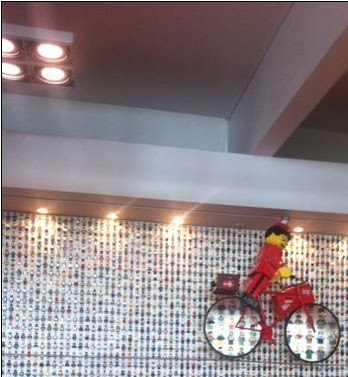
LEGO IDEA Conference Denmark 2013


As always, the LEGO IDEA Conference in Billund Denmark is the place to be! If you are seeking new ideas and inspiration, this is where to find it! 
Right to play

Johann Olav Koss - LEGO Prize Winner


Some of my key learnings - some of them incidental...

1. Once again, the key themes were around:
The importance of play and creativity in learning - there is an essential role that play can have to unlock the potential we don't even know we have.


2. Creative thinking scores decline over time.  Between the ages of 3 to 5, our brain develops and uses creativity to solve problems for over 90 percent of children.
Reality shows that less than 2 percent of people over 25 will retain this level of creativity.  How shocking is that statistic!

3.  There is often a feeling that there is no time to sharpen our saw.  We have to make time to find solutions to old problems.  Our educational system forces us to think in grooves and ruts.  Only by understanding how we get in and out of these grooves, can we get out.

4. Creativity is not something you have or don't have.  There is no such thing as being a creative person.  Creativity can be enhanced and fostered. It is at the heart of problem solving.
Systems at school test us to find the one right answer instead of how we get to the answer.

5. We stay in the groove because it is considered that creativity belongs in the arts and crafts category.  We think innovation is important to succeed in the world.  But we don't think creativity is important - although innovation is the result of creativity.
Creativity is around us and we have to seize the opportunities that are presented to us.  Be open to new ideas.  Be tolerant of new ideas.  Be hungry to find new ideas.

6. Exercise this principle in every day life in companies.  Constantly seek new challenges.  Put people in a new environment and it encourages them to think differently. 
You can create something unexpected around you to get your brain trained to be more flexible.

Tips to take away

  • Don't answer a child who asks questions by say that you don't say you don't know.  Ask how will we find out.  Give them the chance for exploration.  Creative play does this.  Allow the time for creativity.  Allow time for guided and free play.
Entrance to the LEGOLAND Hotel and Conference Centre

  • Don't shoot down ideas in meetings.  Give people the pause that respects creativity. 
  • The Challenge is to be able to flip -  be rigorous when you execute and creative to ideate. Have the ability to switch between ideation and robust implementation.
  • The characteristics that enable creativity are playful.  It is not just recreation and goofing off.  It is a thing we do while we are working.  Opposite of work is not play.  Playful work is good.

  • Take the time to go against the flow.  Zig where others zag. 

The LEGO Foundation believes that quality, playful learning can create change and can sharpen saws.  Every child should have the opportunity to unlock their full potential.  The link between play and creativity and life and work preparedness is very clear.


The call to action.  Consider how we can reverse the trend of decline of creativity.  When we see a three year old with their creative genius, remember we can reverse this trend!!


Children building City of the future